
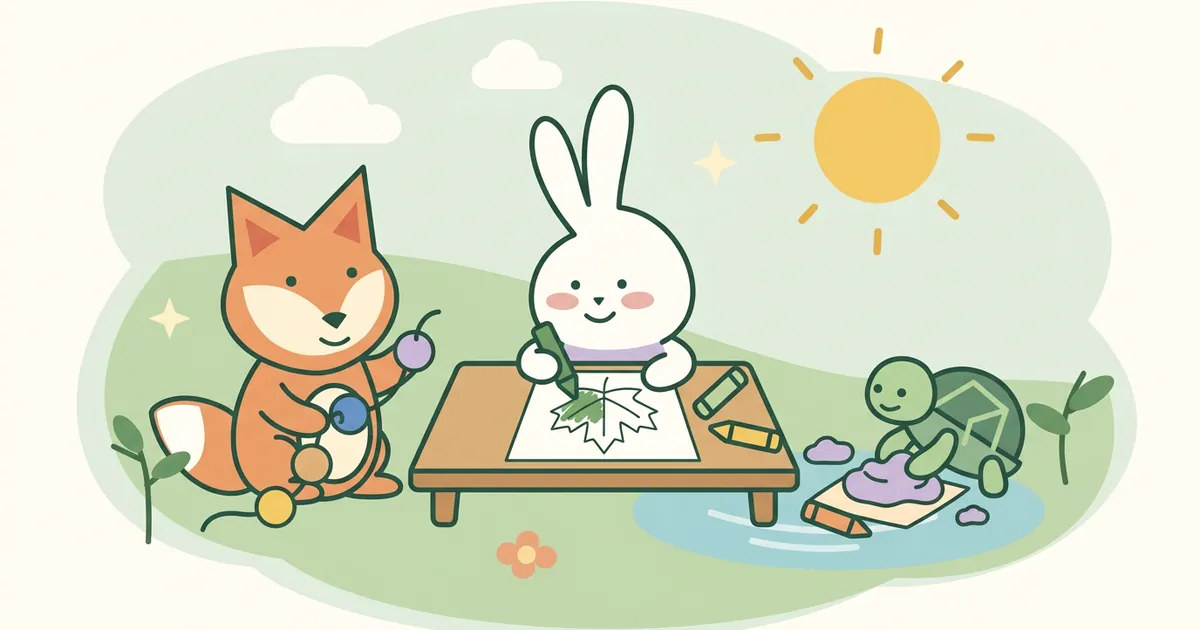
Colouring is one of the most familiar things young children do with their hands. Parents often hear that it is “good for fine motor skills”, and it is easy to see why: holding a crayon, steering it around a shape and pressing just hard enough all take small, controlled movements. This guide explains what fine motor skills are, what reputable child-health sources say about drawing and colouring at ages 4 to 8, and simple ways to make colouring time useful without turning it into homework.
This guide is general information, not medical or therapy advice. Children develop at different rates. If you have concerns about your child’s development, talk with your GP, child health nurse, teacher or an occupational therapist.
What are fine motor skills?
Fine motor skills are the small, precise movements of the hands and fingers, working together with the eyes. Doing up buttons, opening a lunchbox, using scissors, building with small blocks, drawing and eventually handwriting all depend on them.
The Royal Children’s Hospital Melbourne describes the skills involved in learning to write as “prewriting skills”, which include the movements that contribute to holding and using a pencil, and the ability to draw, copy and colour (RCH Occupational Therapy, Prewriting skills info sheet). In other words, colouring is one of the everyday activities that sits alongside the skills children later use for writing.
What to expect around ages 4 and 5
The US Centers for Disease Control and Prevention (CDC) publishes milestone checklists of things most children can do by a certain age. By 4 years, its list includes holding a crayon or pencil between fingers and thumb, not in a fist, and drawing a person with three or more body parts (CDC, Milestones by 4 Years). By 5 years, the list includes paying attention for 5 to 10 minutes during activities such as story time or arts and crafts, and the CDC suggests keeping a box of crayons, paper, paint, child scissors and glue for creative play (CDC, Milestones by 5 Years).
Australia’s Raising Children Network notes that children usually start drawing straight and circular lines in the preschool years, then put lines and shapes together to draw people and objects. It suggests continuing to offer chunky crayons and chalk until children develop the finger-and-thumb grip needed to hold a pencil, and encouraging free drawing and mark-making (Raising Children Network, Handwriting).
These are guides, not deadlines. Milestone lists describe what most children do, and children who are a little earlier or later are common.
How colouring fits in
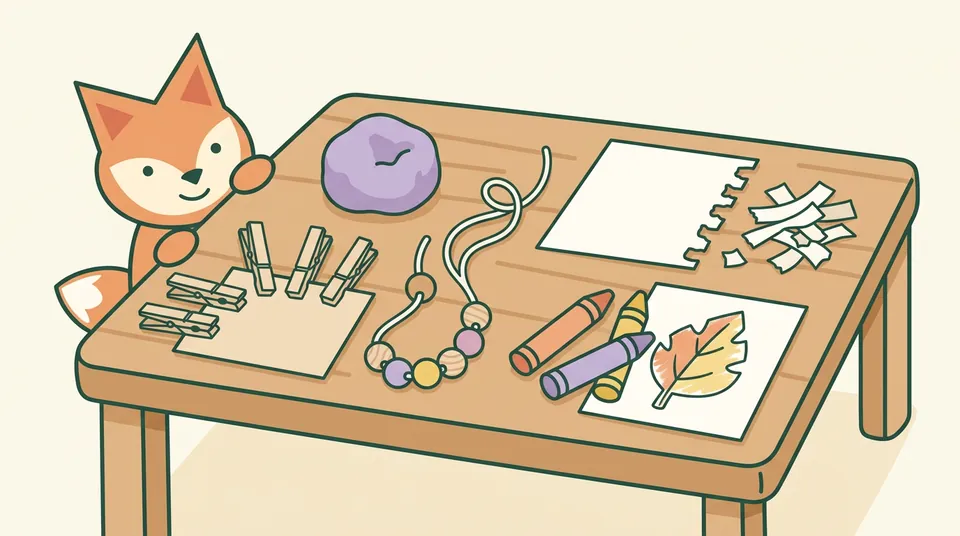
The RCH prewriting information sheet lists colouring among its suggested pencil-and-paper activities: colour in shapes and pictures, start with simple pictures and progress to ones with more detail, and try to colour within the lines. It also suggests having fun drawing together and copying shapes rather than being too eager to teach letters, and praising children as their skills develop (RCH, Prewriting skills).
That gives a useful, practical rule for choosing pages: start with big shapes, then add detail as your child is ready. Colouring is one activity among many, alongside playdough, building blocks, threading beads, cutting and pasting, and outdoor play, which the same RCH sheets also suggest.
Pencil grip: what matters and what does not
Parents often worry about how a child holds a crayon. The RCH “Developing a pencil grip” sheet is reassuring here: most children naturally develop a grip that is comfortable for them, a variety of grips are acceptable, and a grip is only a problem if a child has difficulty writing legibly, at a reasonable speed, or complains of a sore or tired hand (RCH, Developing a pencil grip).
The same sheet describes a comfortable grip as the pencil held between the thumb, index and middle fingers, with the other fingers resting on the table, and suggests a good sitting position: bottom back on the chair, feet flat, forearms resting on a table that suits the child’s size. Those are easy things to set up for colouring time.
Practical tips for colouring time
For ages 4–5
- Choose pages with large areas. Bold outlines and big shapes, such as an animal, a flower or a vehicle, let children succeed without frustration.
- Offer short, chunky tools. Chunky crayons are easier to grip for small hands. Our guide to choosing crayons, pencils or markers compares the options.
- Keep sessions short. A few minutes of focused colouring is a good result at this age. Stop while it is still fun.
- Praise effort, not neatness. Scribbling outside the lines is part of learning control.
For ages 6–8
- Add detail gradually. Pictures with smaller sections, patterns or backgrounds give more practice in control.
- Try different tools. Coloured pencils allow light and heavy pressure; markers need a steady hand to stay in the lines.
- Use a colour guide as a challenge. Matching a colour guide area by area is a natural exercise in looking closely.
- Mix colouring with drawing. Open drawing pages, where children add their own objects to a scene, combine control with imagination.
Set up the space
- A table and chair at the right height, with feet supported (a box or step works).
- Paper held steady with the non-drawing hand, or taped down for younger children.
- Now and then, try a vertical surface: the RCH sheets suggest easels, blackboards or paper taped to a wall.
When to ask for advice
Raising Children Network lists some early signs that a child may need support with drawing and handwriting, such as swapping hands while drawing in the first year of school, gripping a pencil weakly, or avoiding drawing altogether, and recommends talking with a teacher or GP, who may suggest an occupational therapist (Raising Children Network). The CDC similarly encourages parents to talk to their child’s doctor if they have concerns (CDC).
A note on our own books
We make colouring books, not therapy tools. We do not claim that our books improve motor skills or school readiness, and they have not been tested as an intervention. What we can say is that our pages use clear outlines, our subject books start with large shapes, and every book has a free sample so you can check the level of detail first. If your child is just starting out, try a page with big areas such as the free Giraffe page from Zoo Wonders or the Sunflower page from Flowers Up Close.
Sources
- Centers for Disease Control and Prevention, Milestones by 4 Years (page updated May 2026).
- Centers for Disease Control and Prevention, Milestones by 5 Years (page updated May 2026).
- The Royal Children’s Hospital Melbourne, Department of Occupational Therapy, Prewriting skills (Info sheet H).
- The Royal Children’s Hospital Melbourne, Department of Occupational Therapy, Developing a pencil grip (Info sheet A).
- Raising Children Network (Australia), Handwriting in children: development, tips and support.