
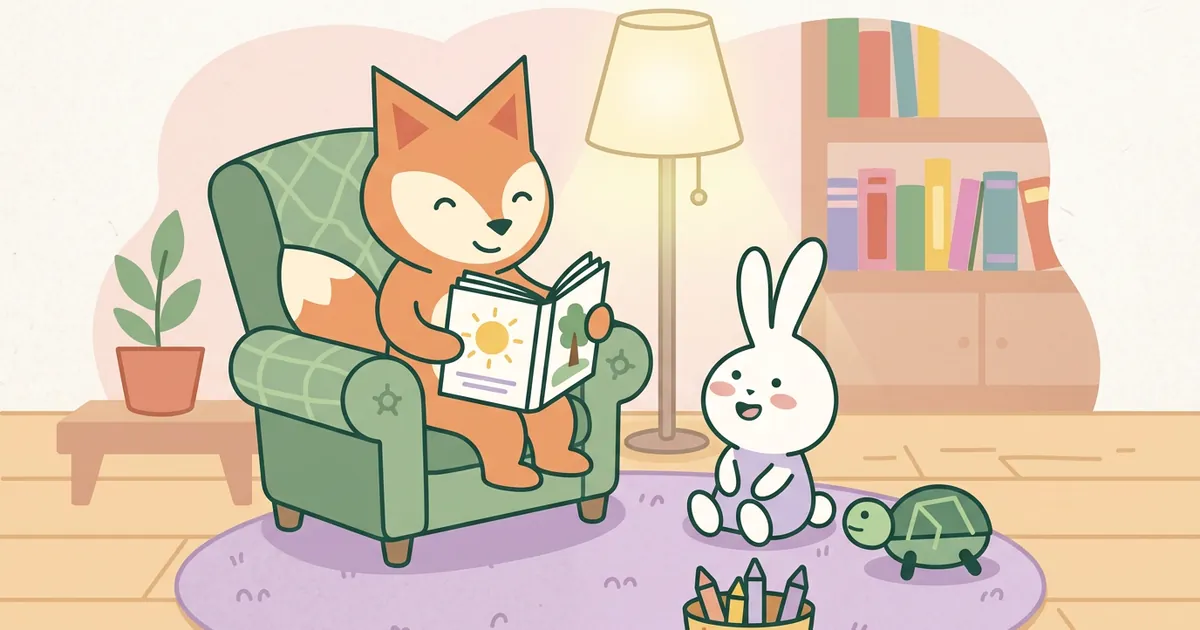
A story colouring book is a picture book and a colouring book in one: a short story told across illustrated pages that children colour, usually with a few drawing activities along the way. Reading one aloud is a little different from reading an ordinary picture book, because the child is often holding a crayon at the same time. This guide shares practical ways to read story colouring books with children aged 4 to 8, at home or in a classroom.
How our story books are put together
Each Puddleleaf story colouring book is a 16-page printable PDF in A4 and US Letter, with a separate colour guide. Most include:
- A note for the grown-up at the start, explaining the theme and how to share the story.
- Story pages: usually eight (six in some titles), each with a picture to colour and a few lines of story.
- Drawing activities: open-ended pages where children invent something of their own.
- A reflection page and a blank drawing page at the end.
Each product page lists exactly what is inside. You can see the format for free: most titles have a three-page sample with the grown-up note, one story page and one activity. Browse them on our kindness colouring pages.
Before you read
- Read the grown-up note yourself first. It takes a minute and tells you what the story is about and what to avoid pushing.
- Print the story pages single-sided so they can be coloured one at a time and kept in order. Our printing guide explains how.
- Decide on one session or several. Many children enjoy reading the whole story once, then colouring a page a day.
Three ways to read and colour
1. Read first, colour after
Read the whole story aloud with the pages in front of you, then let your child pick a page to colour. This keeps the story flowing and works well for younger children.
2. Colour while you read
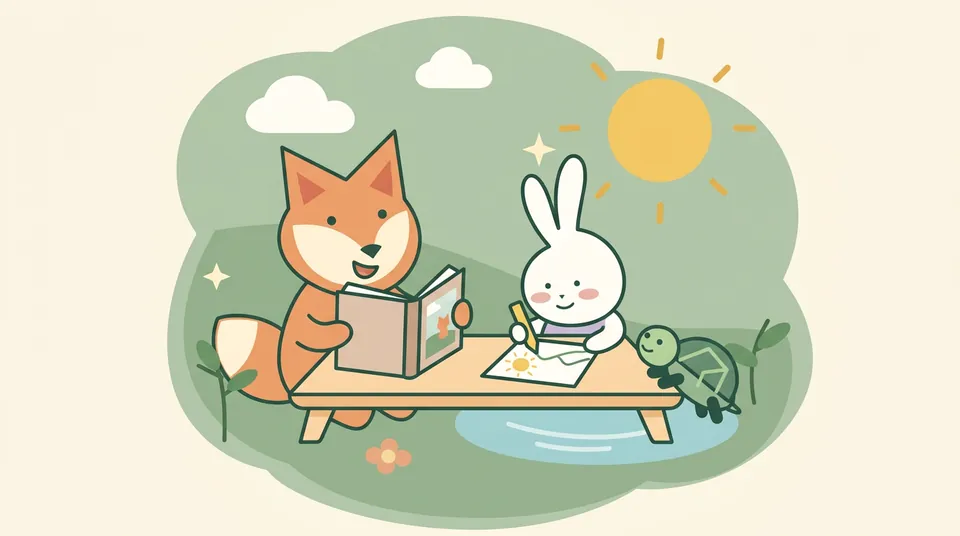
Your child colours the current page while you read its text, and you turn the page together. Colouring gives restless hands something to do, which helps some children listen. Read slowly and pause at the end of each page.
3. One page a day
Read one page, colour it, and stop. Next day, recap (“what happened last time?”) and read the next. Good for building anticipation and for children who like routine.
Asking questions without making it a test
The CDC suggests reading with your child and asking what is happening in the story and what they think might happen next (CDC, Milestones by 4 Years), and asking questions such as “What is happening in the picture?” (CDC, Milestones by 5 Years). A few kinds of questions work well with story colouring books:
- Looking questions: “What can you see on this page? What colour will you make the kite?”
- Prediction questions: “What do you think Crow will try next?”
- Feeling questions: “How do you think Jun feels now? What makes you think that?”
- Choice questions: “If you were Nori, what would you do?”
Accept any kind of answer: speaking, pointing, drawing, or “I don’t know”. Ask one or two questions per page, not ten.
Let personal sharing be optional
Stories about sharing, honesty or feelings naturally invite questions like “has that ever happened to you?” Some children love to answer; others do not want to. Our books are written so that joining in and sharing personal experiences are always optional, and that is a good rule for the reading too. If a child prefers to talk about the characters rather than themselves, follow their lead.
Use the drawing activities
The drawing pages are where children make the story their own: inventing a kite, a lantern or an instrument. Do them after the related story page, and resist the urge to correct. There is no single right answer, and the colour guide leaves these spaces blank on purpose.
Reading with a class
- Show the page. Use a visualiser or display the PDF on the board so everyone can see the picture.
- Give everyone the same page. Print one copy of the current story page per child to colour while you read.
- Pair it with an activity. Our classroom kindness activities suggest a hands-on follow-up for several of the stories.
- Check the licence. Each full book is licensed for one educator’s own noncommercial classroom or small group.
Accessibility notes
Our story books include read-aloud text, and many include picture descriptions, which help if you are reading without the pictures in front of you or supporting a child with low vision. The PDFs themselves are visual and are not fully tagged for screen readers; each product page explains its format.
Which story to start with
- For sharing and turns: The One Red Crayon
- For honesty after a mistake: The Kite We Fixed Together
- For big feelings and disappointment: The Wobbly Bowl
- For listening and cooperation: The Bridge of Many Ideas
- For trying another approach: Crow and Pebbles
See all 24 titles in our story colouring books for ages 4–8.