
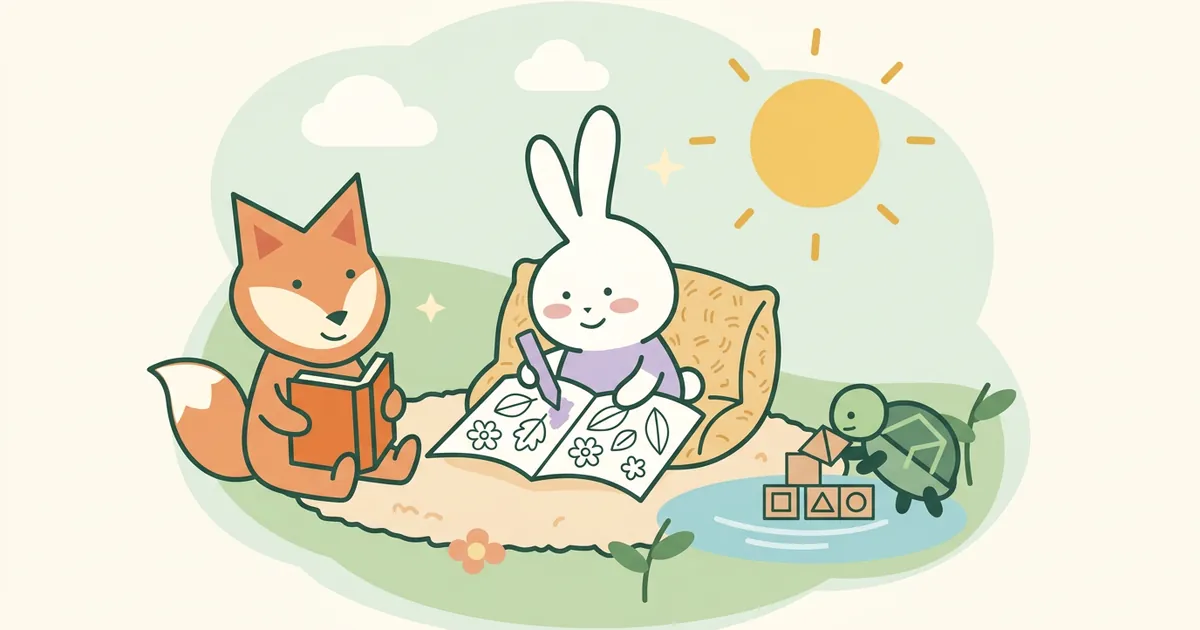
Many children aged 4 to 8 have outgrown daytime naps but still need a calm stretch in the day, and many families would like that stretch to be screen-free. Quiet time is a regular period, often 30 to 60 minutes, where a child plays calmly on their own or near a grown-up. This guide covers how to set it up, what to put in a quiet-time basket, and how colouring and story books fit in.
What the guidelines say about screens
Australia’s 24-hour movement guidelines recommend no more than 1 hour a day of sedentary screen time for children aged 2 to 5 (less is better), and suggest spending quiet time with young children reading, storytelling, doing puzzles or other activities that support development (Department of Health, Disability and Ageing: birth to 5 years). For children and young people aged 5 to 17, the recommendation is no more than 2 hours a day of sedentary recreational screen time, not counting schoolwork, with long periods of sitting broken up (Department of Health, Disability and Ageing: 5 to 17 years).
Screen-free quiet time is one simple way to keep within those limits without having to say “no” all afternoon.
How to set up quiet time
- Pick a regular time. After lunch is common. Predictability makes it easier: it becomes “what we do”, not a punishment.
- Choose a spot. A corner of the bedroom, a beanbag, or a rug in the living room. Comfortable, with good light and a flat surface for colouring.
- Start short. Begin with 15 or 20 minutes and build up. A visual timer or a sand timer helps children see how long is left.
- Make the rules simple. Stay in the quiet spot, use quiet voices, choose from the basket. Toilet and drink breaks are fine.
- End it well. A small “quiet time is finished” ritual, such as a song or opening the curtains, makes the end clear.
What to put in a quiet-time basket
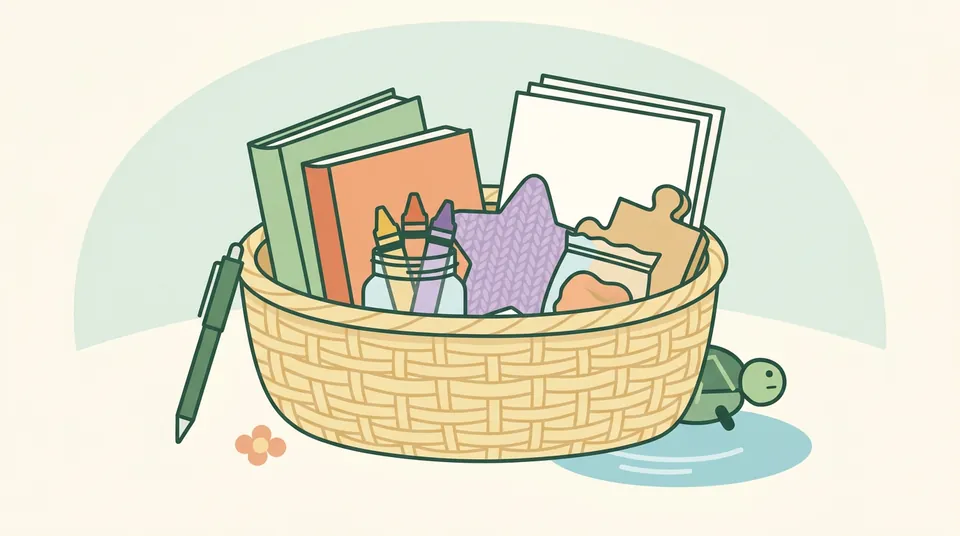
Rotate the contents every week or two so it stays interesting. A good basket has a mix of looking, making and fiddling:
- Colouring pages printed in advance, with a small set of crayons or pencils. Three or four pages is plenty.
- A story colouring book, or a story page from one, for children who like to colour while “reading” the pictures.
- Picture books and audiobooks (audio only, no screen).
- Puzzles suited to their age.
- Building toys such as blocks or construction sets.
- Playdough or threading beads for busy hands.
- A blank notebook for drawing their own pictures.
Why colouring works for quiet time
Colouring is calm, needs little explanation, and has a clear finish point. A child can do it alone, it does not make noise, and there is something to show at the end. The CDC lists paying attention for 5 to 10 minutes during activities such as story time or arts and crafts among the things most children do by age 5, and notes that screen time does not count (CDC, Milestones by 5 Years). A few short colouring pages fit that attention span well.
Tips for making colouring a good quiet-time activity:
- Match the page to the child. Big shapes for younger children, more detail for older ones. Every Puddleleaf book has a free sample so you can check first.
- Offer a colour guide for children who get stuck. A colour guide answers “what colour should this be?” without needing you.
- Pick a theme they love. Vehicles, dinosaurs, flowers or animals: interest keeps them going. Browse vehicles, animals and nature.
- Include a drawing page. Open-ended pages, where they add their own ideas, last longer than plain outlines.
Story books for calmer afternoons
Story colouring books combine a short story with pictures to colour, which suits quiet time well. A grown-up can read the story aloud before quiet time begins, then the child colours the pages afterwards. Gentle choices include The Paper Garden Can Wait (about taking a pause), The Little Seed's Long Wait (about patience) and The Parade with a Quiet Corner (about finding a calm spot). See tips for reading a story colouring book aloud.
When quiet time is hard
- They keep coming out. Shorten the time and build up again. Praise staying in the spot, not being silent.
- They say they are bored. Rotate the basket. A new set of pages or a new puzzle is often enough.
- They fall asleep. That is fine; their body needed it.
- Siblings disturb each other. Separate spots, or headphones with an audiobook for one of them.
Is the online colouring studio “screen-free”?
No. Our free online colouring studio is a screen, so it counts towards screen time. It can be useful for travel or a short session, but for quiet time, printed pages keep things screen-free. Our printing guide explains how to print a few pages at a time.
Start your quiet-time basket today with our free colouring pages: no email, account or checkout.